
Season 39
1990-1991
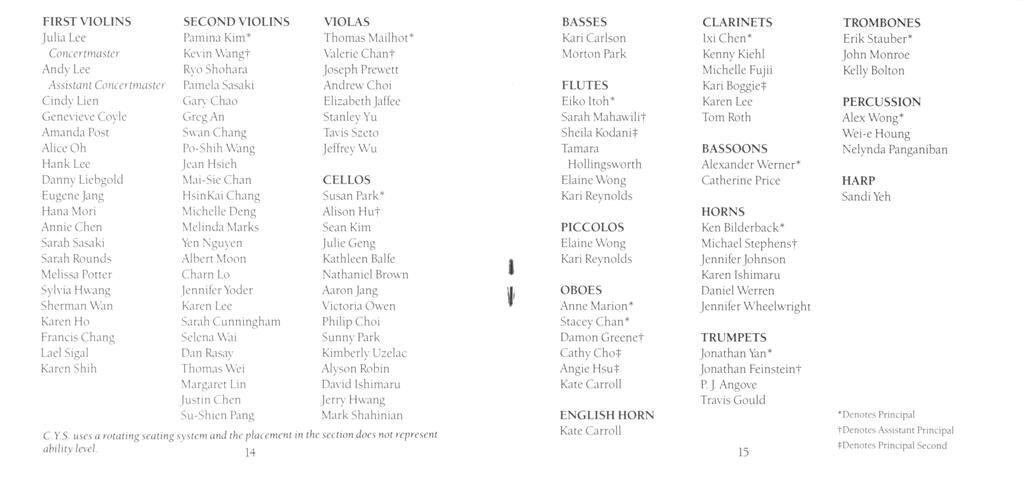
Roster
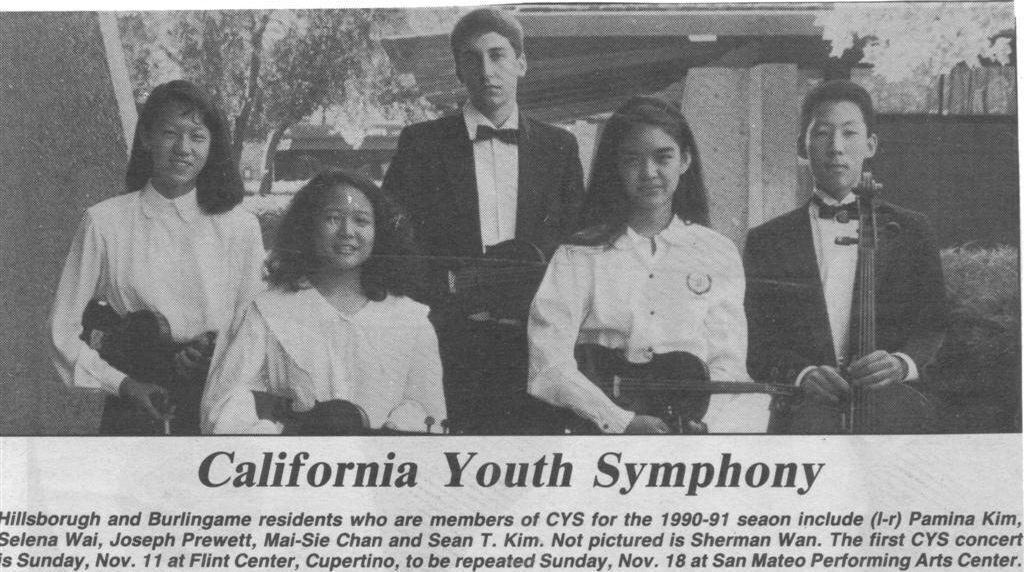
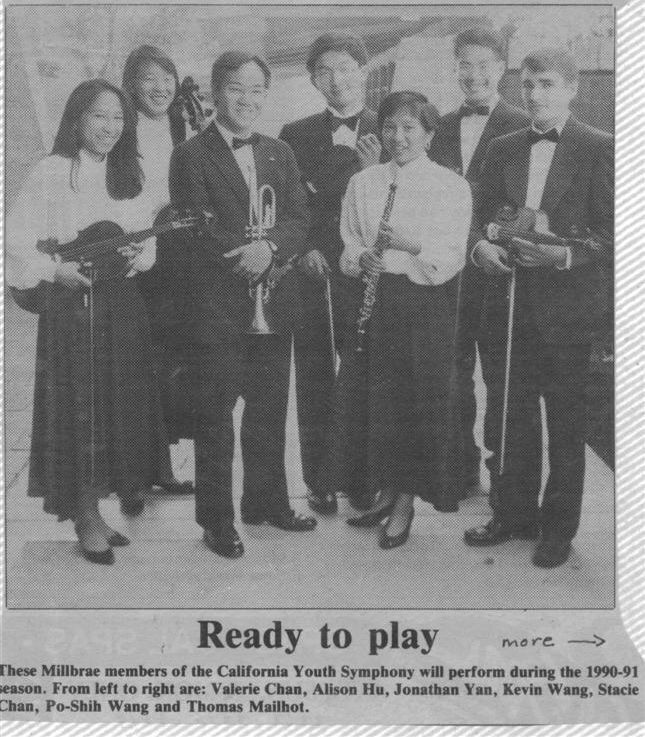
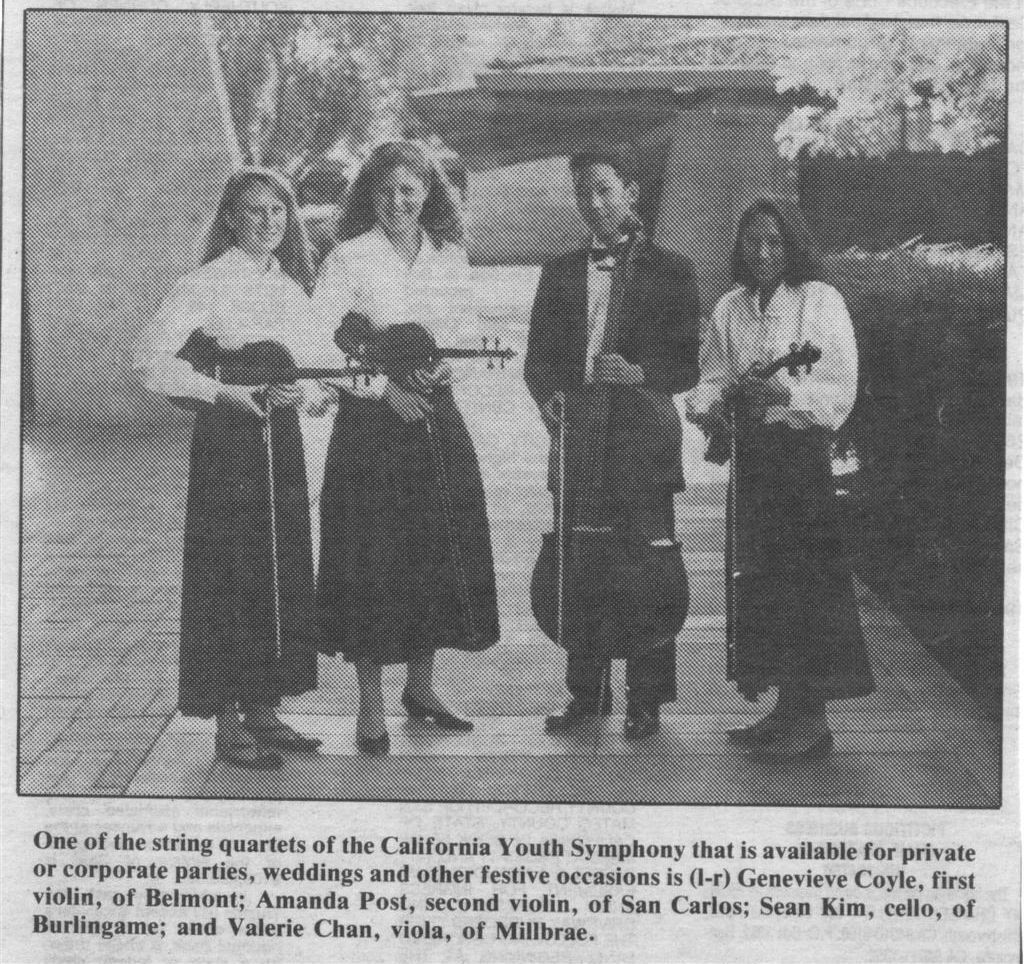
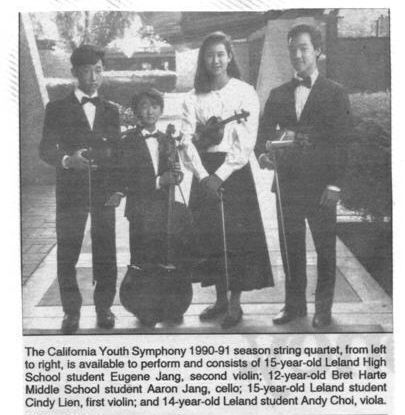
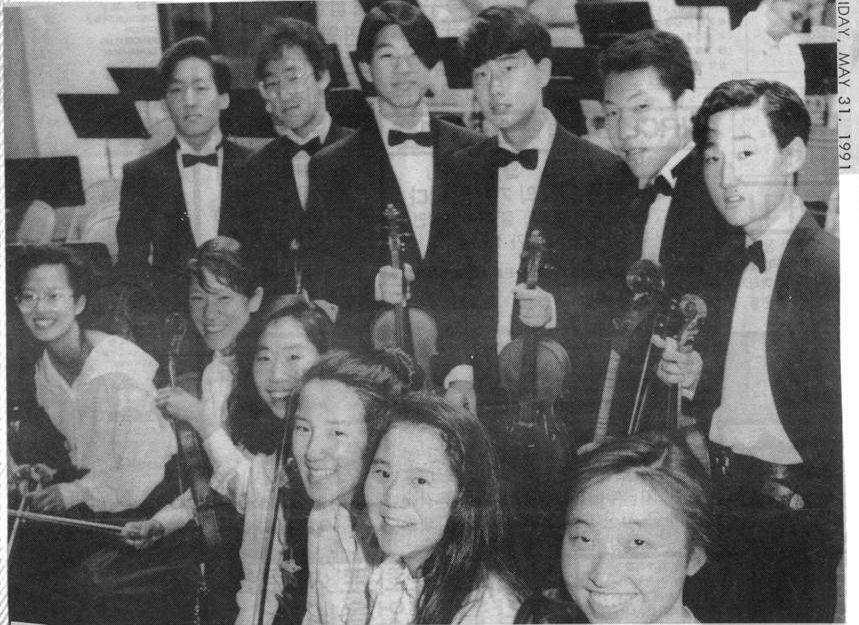
Seniors
November 1990 Concert
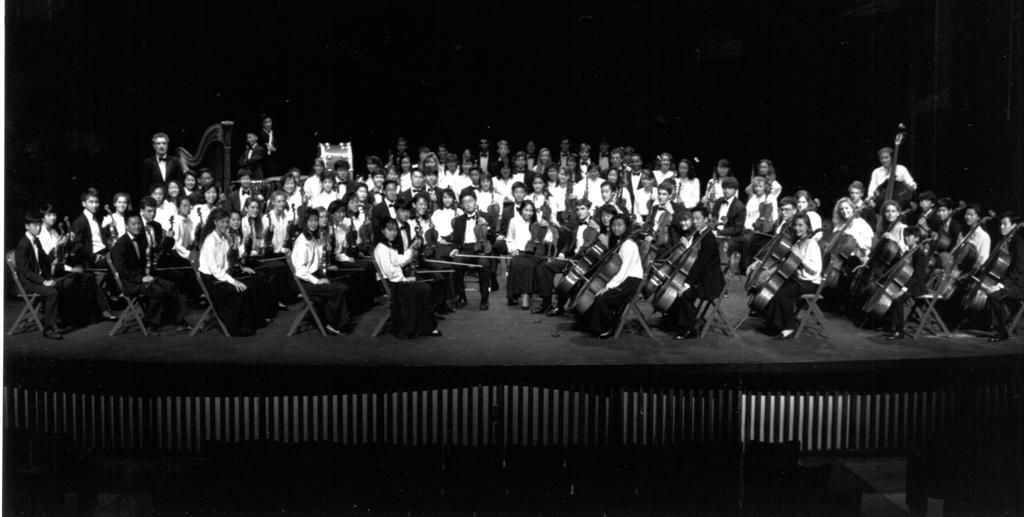
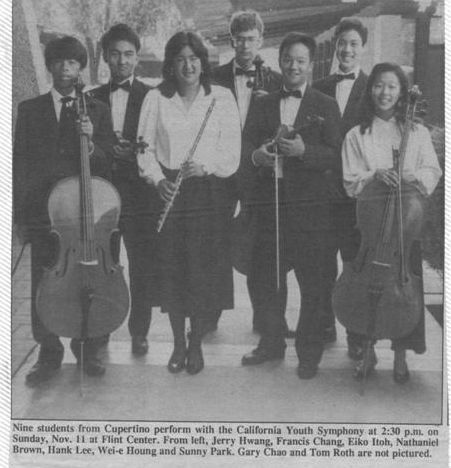
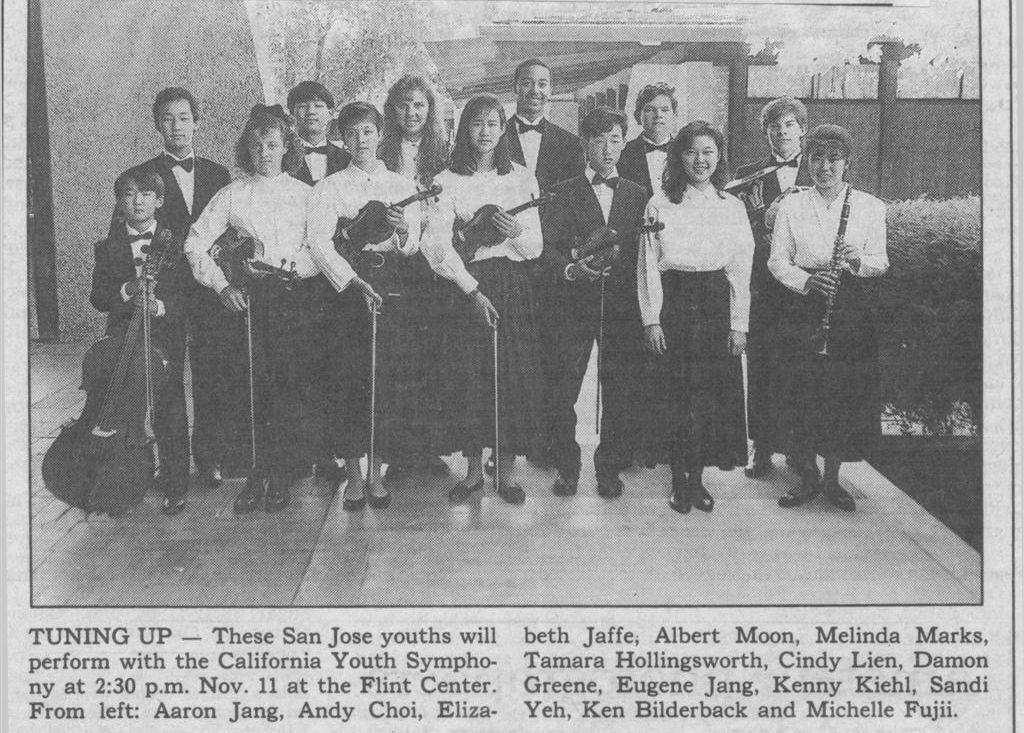
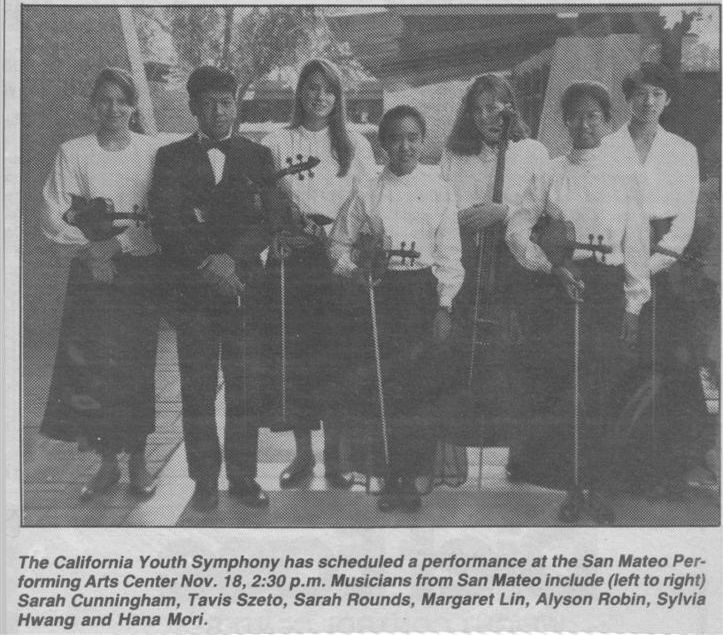
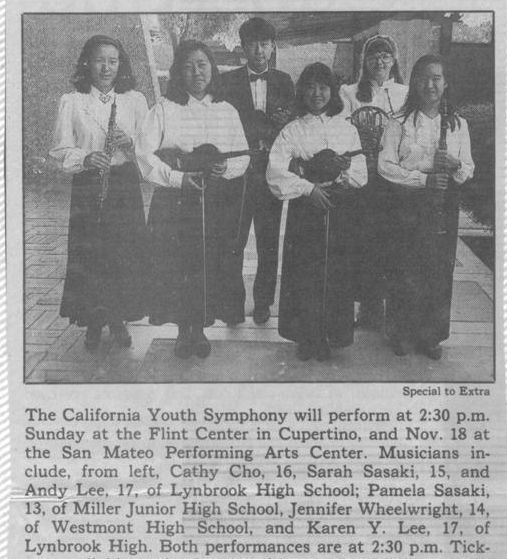
The November 1990 concert series marked a significant transitional moment in the California Youth Symphony’s history as it opened its 39th Season. These performances, held on November 11 at the Flint Center and November 18 at the San Mateo Performing Arts Center, were led by Leo Eylar as a guest conductor. Eylar, who was then gaining an international reputation as both a conductor and composer, would soon become a defining figure for the organization. The program reflected this high level of artistic ambition, pairing demanding 20th-century atmospheric works with the technical rigors of the Classical and Romantic periods.
The concert opened with the lush, evocative textures of Alberto Ginastera’s Pampeana No. 3: Pastoral Symphony, a work that required the young musicians to navigate complex modern rhythms and expressive "contemplative" sections. This was followed by the soaring lyricism of Edvard Grieg’s Piano Concerto in A Minor, Op. 16, featuring guest soloist Bill-John Newbrough. Newbrough’s performance provided a brilliant showcase of Romantic virtuosity, balancing the concerto's grand, thunderous octaves with its more delicate, folk-inspired melodic passages.
Following the intermission, the program shifted toward the crystalline precision of Mozart’s Symphony No. 38 in D Major ("Prague"). Performing Mozart is often considered the ultimate test for a youth orchestra’s discipline, and the 100-member ensemble was praised for its clarity and balance. The performance reached its grand climax with Claude Debussy’s La Mer (The Sea). This monumental impressionist masterpiece, with its vivid musical depictions of wind and waves, served as a powerful finale that demonstrated the orchestra's sophisticated command of orchestral color and large-scale symphonic structure.
For the website, this concert can be framed as the "Symphonic Changing of the Guard," as the archival materials highlight the biographies of both Dr. Jakey and Leo Eylar side-by-side. This program not only celebrated the orchestra’s established legacy under Jakey but also introduced the visionary leadership that would guide CYS into the new millennium.
In Memoriam: Dr. Lauren Jakey (1937–1991)
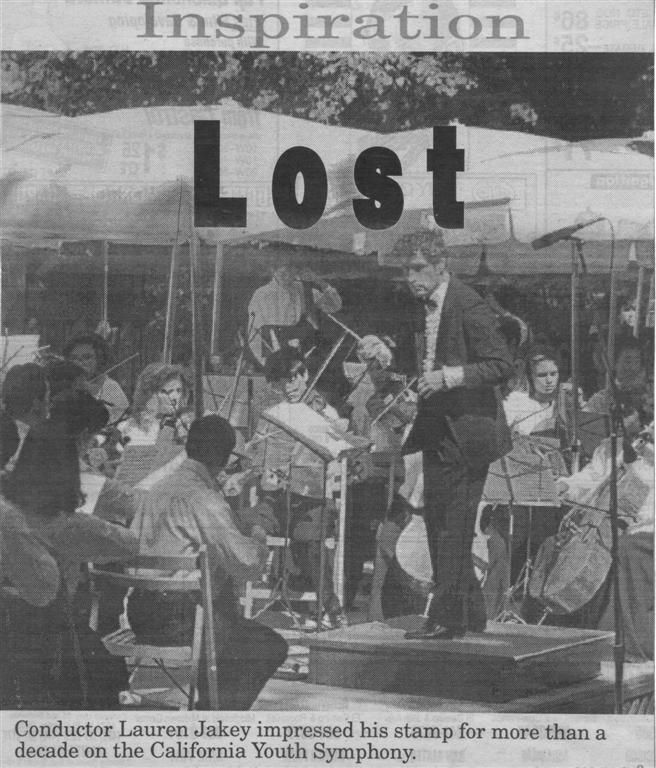
The passing of Dr. Lauren Jakey on January 14, 1991, brought a sudden and profound sense of loss to the California Youth Symphony during its 39th season. At just 53 years old, Dr. Jakey’s untimely death deprived the Peninsula of one of its most dedicated musical mentors and visionaries. Having led the organization for more than a decade, he had impressed a permanent stamp of excellence upon the symphony, transforming it into a world-class institution. To his students and colleagues, he was a living example of musical integrity, a man who never took liberties with a composer's intent and insisted that his young musicians perform with the discipline and "aplomb" of a professional adult orchestra.
Under Dr. Jakey’s leadership, the organization underwent a remarkable period of expansion and reached new heights on the global stage. He was responsible for developing a comprehensive training structure that included not only the superlative 110-member senior ensemble but also two junior orchestras and two string preparatory groups, ensuring that musical opportunities reached students of all ages across the Bay Area. His final summer with the orchestra in 1990 was marked by a triumphant tour of England, Wales, and France. A historic highlight of this tour—and perhaps of his entire tenure—was CYS becoming the first youth orchestra ever invited to perform at the prestigious Festival de Sully near Orleans, a performance that executive director Jim Hogan remembered as a crowning achievement for the conductor and his students.
Dr. Jakey was remembered by parents and board members as a "demanding" yet "dynamic" teacher who had a special rapport with the young people he led. He was known for his terrifyingly high level of commitment, often leaving parents in absolute amazement at the professional results he could extract from a group of teenagers after just two weeks of summer camp. Despite his rigorous standards, he possessed a warmth that was best seen in the twinkle of his eyes when he spoke about the orchestra's future. He was a gentleman who stayed loyal to the music and to his musicians, challenging them to live up to his high level while providing the inspiration they needed to get there.
Beyond the podium, Dr. Jakey was affectionately known for his notorious love of English sports cars. He was famously the last person to leave rehearsals, often found busy "under the hood" of a different temperamental old clunker, trying to get it started for the drive home. He would often joke that his obsession with these cars "kept him off the streets," a bit of lighthearted humor that contrasted with his fierce intensity on the conductor’s stand. As CYS moved forward, it did so as a living memorial to his myriad accomplishments, forever carrying the legacy of a man who was, as his colleagues noted, truly much more than the sum of his parts.
The Transition into a New Era (March 1991 Concert)
The March 1991 concert series was a deeply poignant moment in the California Youth Symphony’s history, serving as the first major performance following the sudden passing of Dr. Lauren Jakey in January. Under the baton of Leo Eylar, the orchestra performed on March 17 at the San Mateo Performing Arts Center and March 24 at the Flint Center. The printed programs carried a solemn, explicit dedication: "These concerts are dedicated to the memory of Dr. Lauren Jakey." This sentiment infused the performances with a sense of purpose and reverence, as the young musicians sought to honor the mentor who had led them for over a decade.
Program Overview: A Study in Contrast and Emotional Depth
The musical selection for this series was a sophisticated study in emotional range, beginning with the bright, spirited energy of Mendelssohn’s Symphony No. 4 in A Major ("Italian"). Its four movements, ranging from the jubilant Allegro vivace to the rapid-fire Saltarello finale, provided a showcase for the orchestra's rhythmic precision and technical agility. This lighter opening served as a perfect counterpoint to the monumental work that anchored the second half of the program: Sibelius’s Symphony No. 1 in E Minor. Known for its dark, brooding textures and soaring Finnish Romanticism, the Sibelius symphony allowed the ensemble to demonstrate the "mature musicianship" and lush orchestral color that had become a hallmark of the Jakey era.
Featured Soloist: Semyon Kobialka (Cello)
The centerpiece of the first half was Tchaikovsky’s Variations on a Rococo Theme for Violoncello and Orchestra, op. 33, featuring guest soloist Semyon Kobialka. Kobialka, an accomplished cellist whose family has long been synonymous with Bay Area musical excellence, delivered a performance that required both elegant grace and fierce technical virtuosity. Navigating the work's eight intricate variations, Kobialka’s interpretation added a layer of refined classical beauty to a series otherwise defined by the heavy symphonic grandeur of the Sibelius and the emotional weight of the dedication.
A New Vision Unveiled: The 1991 Season Finale
The May 1991 Season Finale served as a triumphant and forward-looking conclusion to one of the most transformative years in the California Youth Symphony’s history. Conducted by the newly appointed Music Director Leo Eylar, the concerts took place on May 19 at the Flint Center and May 26 at the San Mateo Performing Arts Center. This series was the first to be performed after the formal announcement of Eylar as the permanent successor to the late Dr. Lauren Jakey. The program was carefully curated to showcase the orchestra’s ability to handle complex 20th-century textures alongside high-energy Romantic masterworks, signaling Eylar’s intent to expand the repertoire and challenge the ensemble with sophisticated, demanding literature.
The performance opened with Aaron Copland’s Quiet City, a haunting and atmospheric work that highlighted the individual artistry of soloists Jonathan Yan on trumpet and Kate Carroll on English horn. This was followed by the brilliant and festive Capriccio Italien by Tchaikovsky, which allowed the full 100-member ensemble to display its power and rhythmic precision. Following the intermission, the spotlight shifted to cello soloist Susan Park, who performed the spirited first movement of Kabalevsky’s Cello Concerto No. 1. Park’s technical facility and lyrical expression were a major highlight of the program, continuing the long-standing CYS tradition of providing professional-level platforms for its most talented young soloists.
The season reached its grand climax with Igor Stravinsky’s Firebird Suite (1919), a monumental work known for its vivid orchestral colors and avant-garde rhythms. The selection of the Firebird was a bold choice that perfectly aligned with Eylar’s newly stated vision for the future of CYS; he had recently noted in local media that the ensemble was "better than a lot of professional orchestras" and deserved to be entrusted with the most challenging symphonic works. By concluding the 39th season with such a spectacular and technically taxing piece, the orchestra not only honored the high standards established during the Jakey era but also vibrantly embraced the energy and ambition of the new millennium.