
Season 43
1994-1995
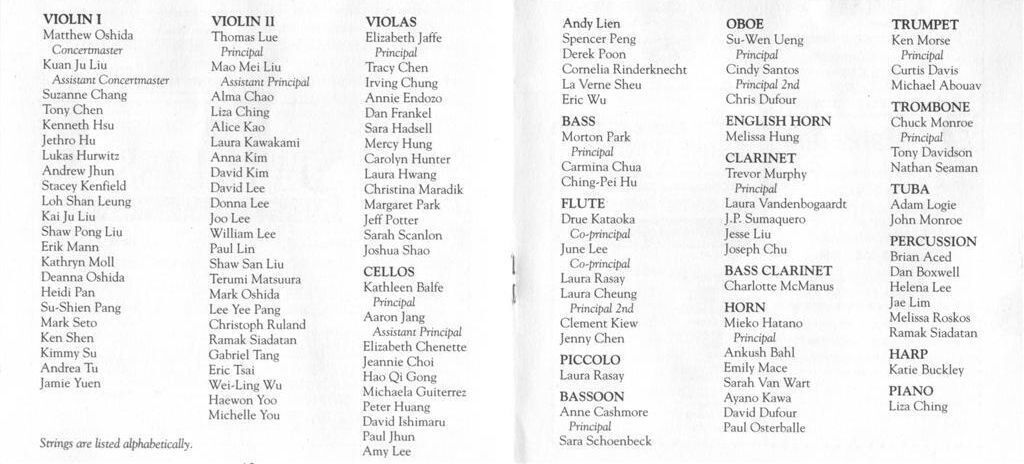
Roster
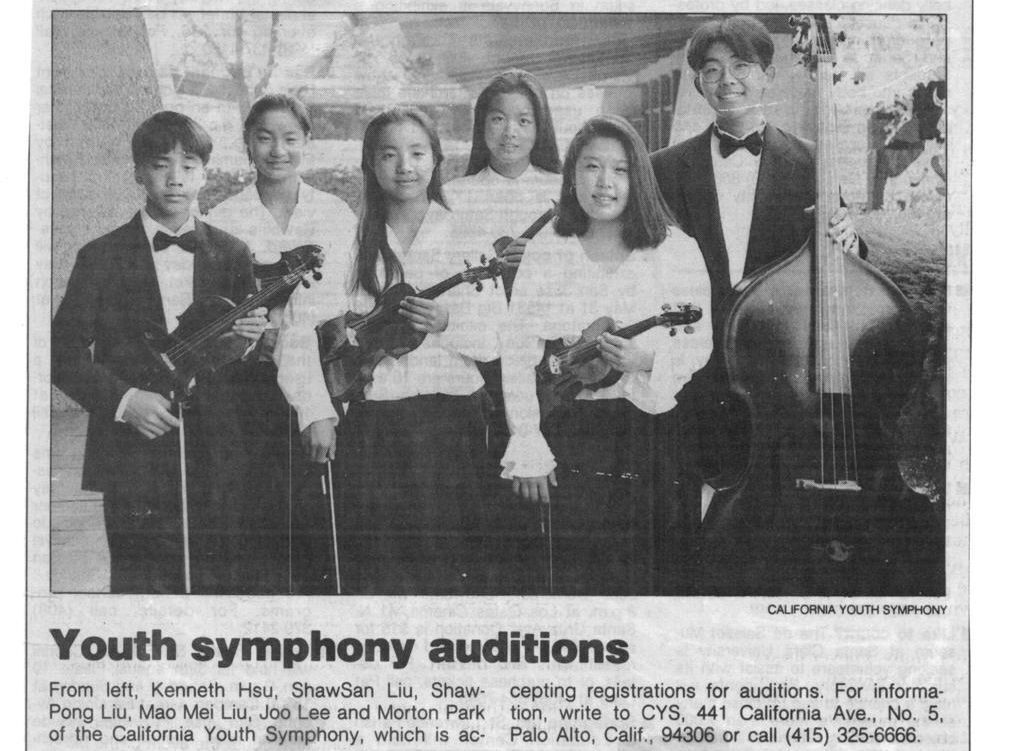
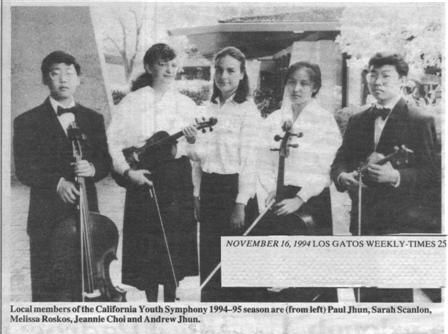
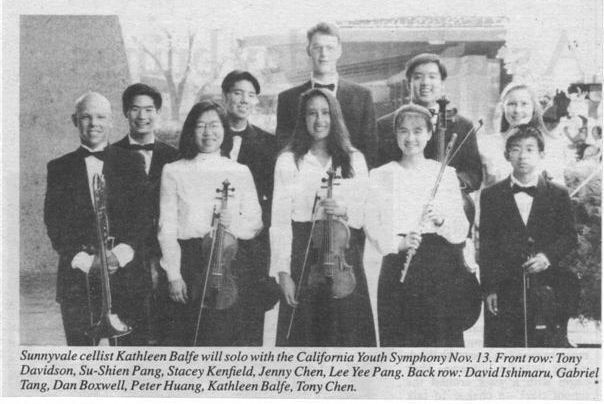
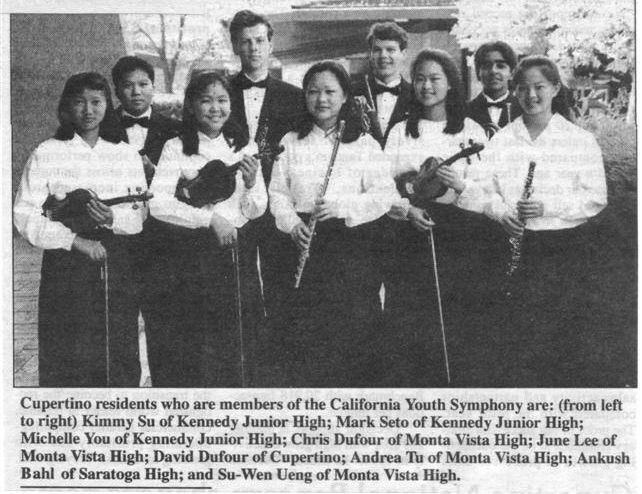
Seniors
A Historic Triumph: The 1994 Vienna International Victory
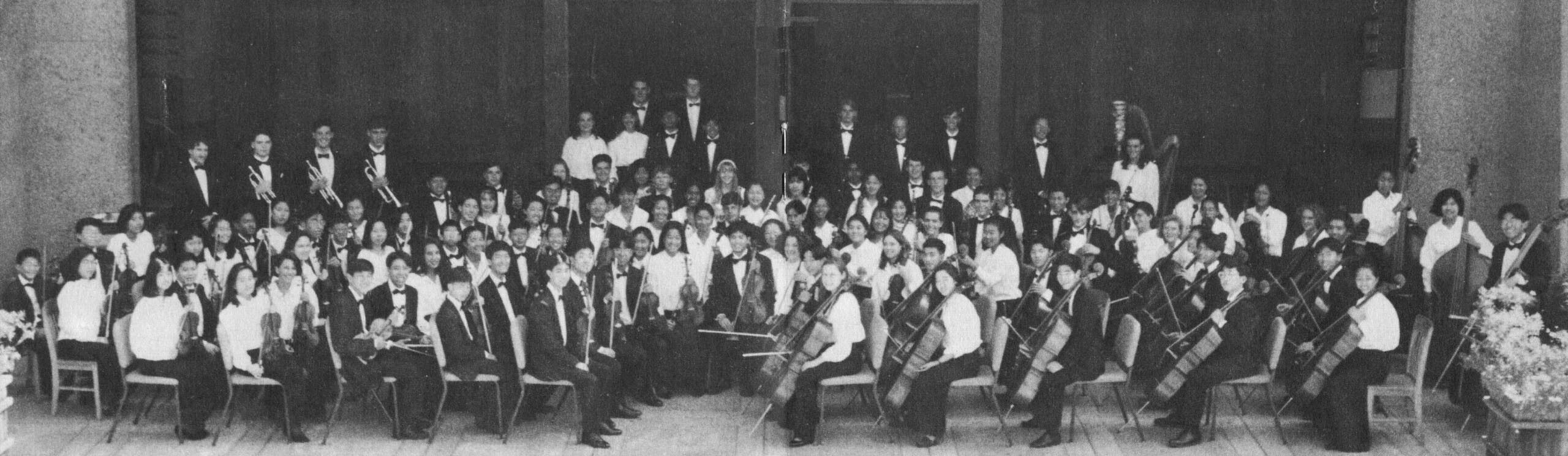
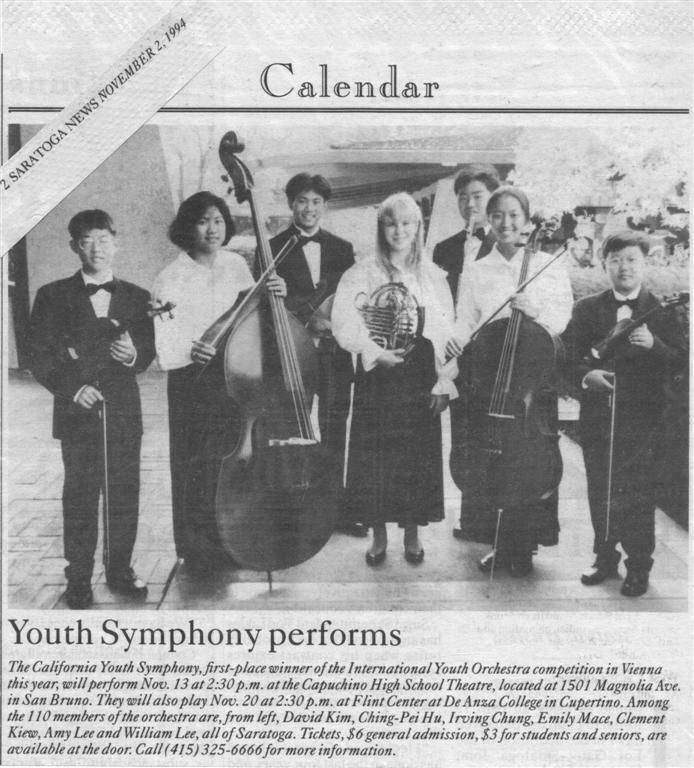
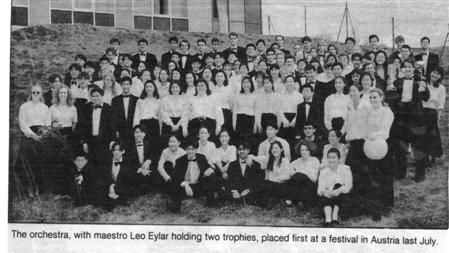
In July 1994, the California Youth Symphony reached a pinnacle of international acclaim during its landmark 10th overseas tour. Traveling through the cultural capitals of Central Europe—Salzburg, Prague, Vienna, and Budapest—the orchestra, led by Music Director Leo Eylar, demonstrated a level of artistry that resonated far beyond the borders of the San Francisco Peninsula.
First Prize on the World Stage
The defining moment of the tour took place at the prestigious International Youth and Music Festival in Vienna. Competing against elite ensembles from around the globe, CYS was awarded the First Prize in the Youth Orchestra category. In addition to the top honor, the symphony received the coveted City of Vienna Award for Musical Excellence, a distinction rarely bestowed upon youth ensembles. Bernard Keeffe, the Festival Music Director from the BBC in London, lauded the performance as "outstanding" and "extremely impressive," noting the orchestra's professional-grade precision and emotional maturity.
Musical Ambassadors in Europe
The tour’s repertoire was as challenging as it was diverse, featuring masterworks such as Rimsky-Korsakov’s Scheherazade and Hindemith’s Symphonic Metamorphosis. To satisfy the festival's requirement for a work by a composer from the orchestra’s home country, CYS performed Samuel Barber’s Overture to "The School for Scandal", which became a signature piece of the tour. These works filled the legendary halls of Europe, from the newly renovated Rudolfinum-Dvořák Hall in Prague to the historic Vigadó Hall in Budapest, establishing our students as world-class musical ambassadors.
A Lasting Legacy: The First CYS CD
The sheer brilliance of the 1994 tour inspired a major milestone in the organization's history. Moved by the extraordinary quality of the performances in Vienna, Maestro Eylar proposed a bold idea during the tour's farewell celebration: to capture the orchestra’s sound in a professional recording. This led to the production of CYS’s very first compact disc, ensuring that the "Vienna Standard" of 1994 would be preserved for future generations. Today, this victory remains a cornerstone of the CYS legacy, representing the tireless dedication of our musicians, the vision of our leadership, and the enduring support of our community.
The "Vienna Glow": Season Opening Concert (November 1994)
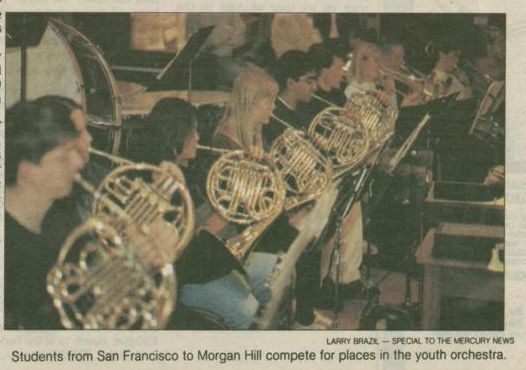
CYS opened its 43rd season in November 1994, carrying the immense momentum of its recent First Prize victory at the International Youth and Music Festival in Vienna. Under the direction of Maestro Leo Eylar, the 112-member ensemble returned to the Bay Area stage with a "Vienna Glow," performing at the Capuchino Theatre in San Bruno on November 13 and the Flint Center in Cupertino on November 20. This series served as a powerful homecoming for the young musicians, showcasing a professional level of maturity and technical precision that had become the orchestra’s new international benchmark following their success in Europe.
The program was a rigorous display of orchestral storytelling and virtuosity, beginning with the dark, impressionistic swirls of Maurice Ravel’s La Valse, which required the ensemble to navigate complex rhythms and lush textures. The energy of the concert intensified with Sergei Rachmaninov’s Rhapsody on a Theme of Paganini, featuring the brilliant piano soloist Jinwha Choi. Choi’s interpretation of the work’s famous variations required a seamless blend of thundering romanticism and delicate articulation, a challenge the orchestra met with the sophisticated accompaniment style typically reserved for professional-grade symphonies.
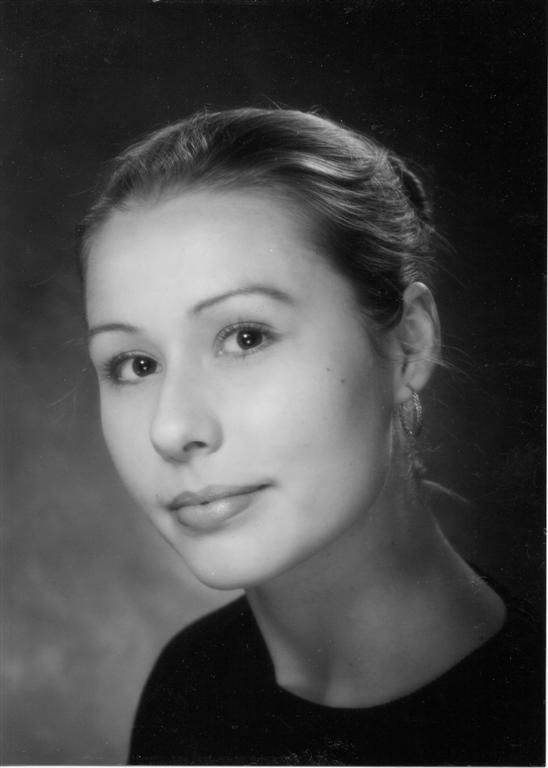
The centerpiece of the performance was Richard Strauss’s massive tone poem, Don Quixote, which functioned as a vibrant musical narrative for cello and viola. This work featured two of the orchestra’s own standout leaders, cellist Kathleen Balfe and violist Elizabeth Jaffe, in the titular roles of the knight-errant and his squire, Sancho Panza. Balfe, returning to the CYS spotlight two years after her 1992 debut, delivered a nuanced portrayal of the legendary character, while Jaffe’s viola provided a perfect lyrical and comedic foil. By successfully navigating such a complex and theatrical work, the 1994–1995 ensemble solidified its reputation for tackling the most demanding corners of the symphonic catalog, a feat that paved the way for the recording of the orchestra’s very first professional CD later that year.
Picture: Kathleen Balfe
March 1995 Concert
Concert Program Overview
In March 1995, CYS continued its 43rd season with a program defined by dramatic intensity and technical brilliance. Under the direction of Maestro Leo Eylar, the orchestra performed at the Flint Center in Cupertino on March 12 and the San Mateo Performing Arts Center on March 19. The repertoire for this series was exceptionally bold, featuring three masterpieces of the Romantic and Modern eras. The concerts opened with the haunting, visceral energy of Modest Mussorgsky’s "Night on Bald Mountain," followed by Henryk Wieniawski’s virtuosic "Violin Concerto No. 2 in D Minor." The program concluded with one of the most powerful works in the symphonic repertoire, Dmitri Shostakovich’s "Symphony No. 5 in D Minor," a choice that allowed the 112-member ensemble to showcase the sonic depth and emotional maturity they had refined during their award-winning tour to Vienna the previous summer.
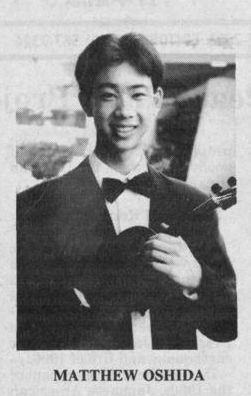
Featured Soloist: Matthew Oshida (Violin)
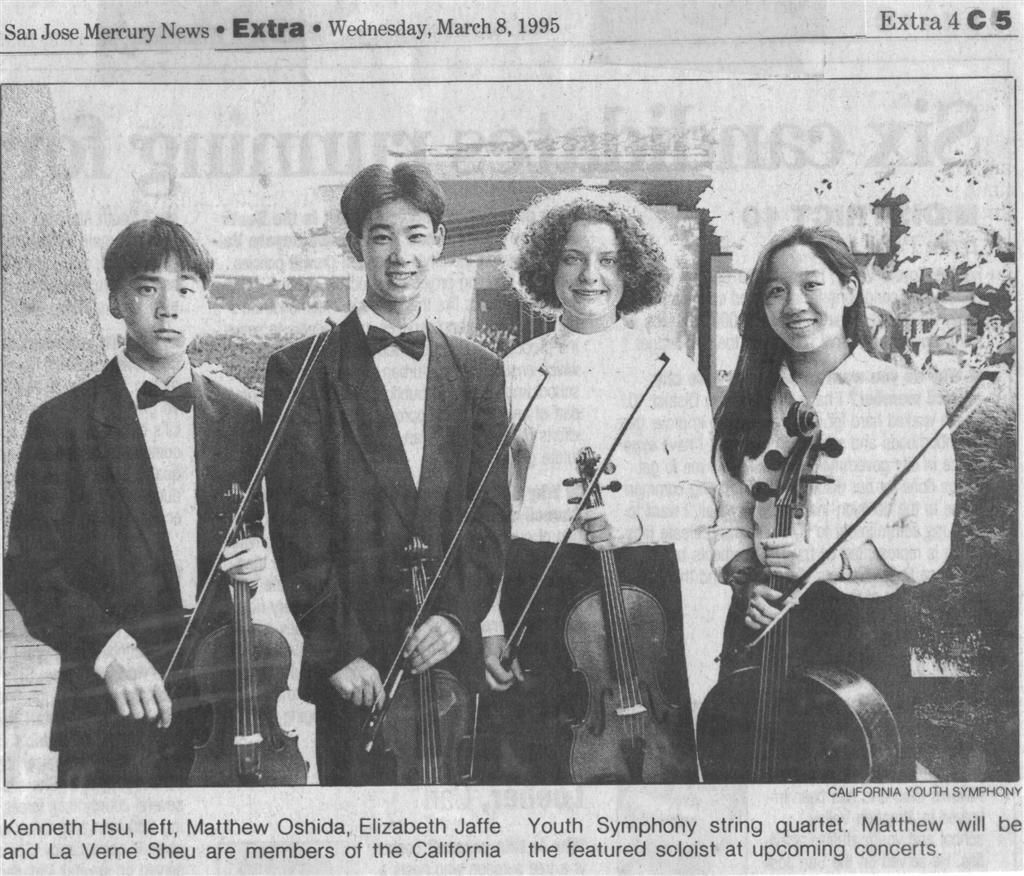
The highlight of the March series was the featured performance by the 1995 CYS Solo Competition winner, Matthew Oshida. A 17-year-old senior at Los Altos High School and the orchestra’s own Concertmaster, Matthew delivered a commanding interpretation of the Wieniawski Concerto. His performance was made even more remarkable by the instrument he played: a rare 1790 Mantegazza violin, generously on loan to him for the occasion. The rich, historic tone of the violin complemented Matthew’s technical precision, which he had developed since beginning his studies at the age of three.
A student of Daniel Kobialka, the principal second violinist of the San Francisco Symphony, Matthew was already a veteran of the CYS stage, having performed with the ensemble for several years. His leadership as Concertmaster and his success as a soloist exemplified the high caliber of musicianship within the 1994–1995 roster. This concert stood as a milestone in his young career, representing a perfect fusion of a talented young artist, a legendary instrument, and a world-class youth orchestra.
Concert Program Overview
CYS brought its historic 43rd season to a close in May 1995 with a pair of masterful performances at the San Mateo Performing Arts Center and the Flint Center in Cupertino. Under the baton of Maestro Leo Eylar, the program served as a victory lap for an ensemble that had spent the year performing at an international "gold standard" following their first-place win in Vienna. The repertoire was a vibrant mix of Romantic fantasy and 20th-century intensity, opening with the magical horn calls of Weber’s "Oberon Overture" and concluding with the lush, cinematic storytelling of Prokofiev’s "Cinderella" Suite No. 1. This finale was not only a display of orchestral power but a celebration of the extraordinary individual talent found within the symphony’s own ranks.
Featured Soloist Profiles
The May concerts featured two outstanding winners of the 1995 CYS Senior Soloist Competition, both of whom were assistant principals in their respective sections. Assistant Cello Principal Aaron Jang, a senior at Gunn High School and a Stanford University President’s Scholar, tackled the brooding and technically punishing Shostakovich Cello Concerto No. 1. His performance, which included a collaborative effort with horn player Mieko Hatano, demonstrated a level of emotional maturity and structural understanding that captivated the audience. Jang’s transition from the CYS stage to Stanford served as a testament to the high academic and artistic caliber of the orchestra’s graduating class.
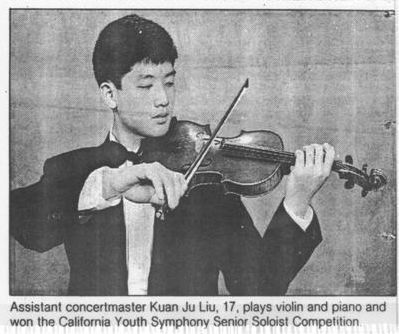
Sharing the spotlight was Assistant Concertmaster Kuan Ju Liu, who delivered a dazzling performance of Saint-Saëns’ "Introduction and Rondo capriccioso." Kuan Ju’s journey with CYS was a storied one; having performed at the Sydney Opera House as a sophomore and in Vienna as a junior, his solo debut was a fitting farewell. Known as a "Renaissance" student, Kuan Ju was a National Merit Finalist, president of the Gunn High School math club, and a researcher at the Lockheed Palo Alto Research Lab. His ability to balance the rigors of astrophysics with the virtuosic demands of the violin earned him a place at Harvard University, where he moved on to major in mathematics and physics. Together, these soloists exemplified the CYS mission: using the discipline of elite music to forge the leaders and thinkers of tomorrow.
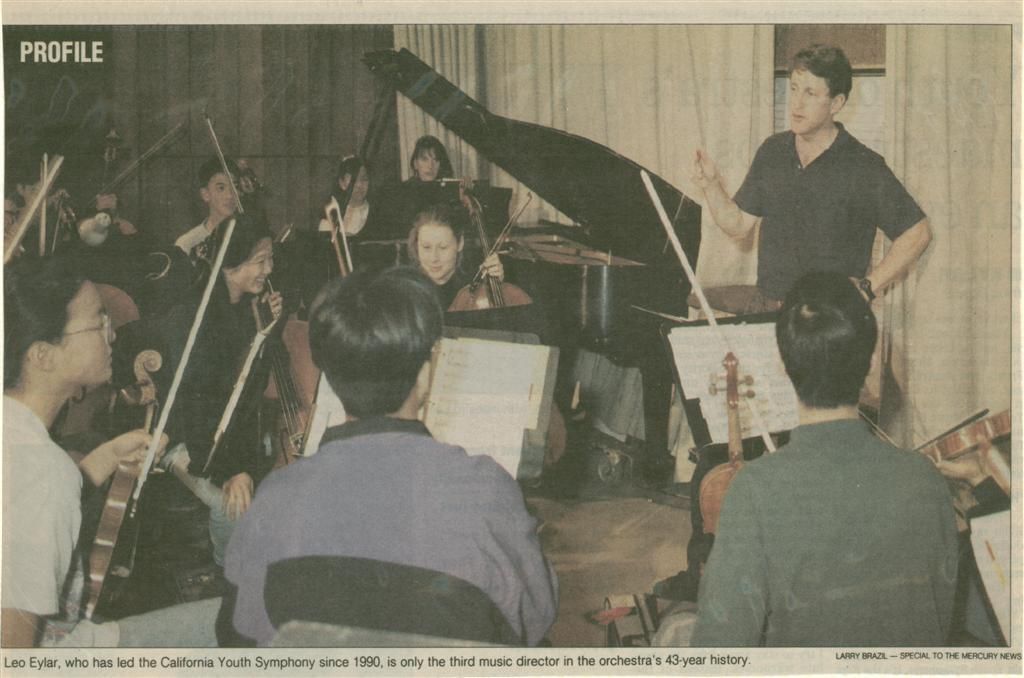
Maestro Leo Eylar: The Architect of the CYS Renaissance (1995 Feature)
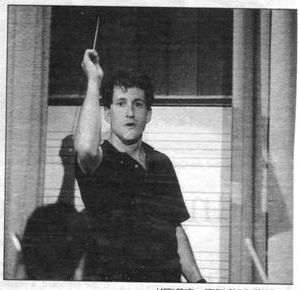
In March 1995, following the historic First Prize victory in Vienna, Peninsula Living published a definitive profile of CYS Music Director Leo Eylar. The feature captured a leader who was much more than a conductor; he was a composer, a dedicated educator, and a "Renaissance man" whose personal passions for astronomy and physics mirrored the intellectual curiosity of his students.
The "Composer" at the Podium
Though known primarily as a conductor, Eylar’s heart remained rooted in composition. In the feature, he emphasized the importance of involving young musicians in the creation of new music, most notably during the 1993 premiere of his own work, The Temptation of St. Anthony. Having transitioned from a career as an associate principal violinist for the San Jose Symphony, Eylar brought a "player’s perspective" to the podium, allowing him to push the orchestra to technical heights rarely seen in youth ensembles.
The Repertoire of "Fire"
Eylar was famous for his bold programming, intentionally avoiding overplayed "cliches" in favor of massive, fresh works like Rachmaninov’s Third Symphony or Strauss’s Don Quixote. He believed that while professional musicians might grow weary of standard repertoire, CYS students brought a unique "fire" to the stage.
"These kids put their heart and soul into making music. They have a certain fire that I find it hard to reproduce professionally." — Leo Eylar, 1995
The Man Behind the Music: Stars and Speedometers
The 1995 profile revealed a human side to the Maestro that resonated deeply with the CYS community. Living in Oakland and commuting between Sacramento State University and CYS rehearsals, Eylar famously drove an old Honda with over 240,000 miles on the odometer—a testament to his tireless dedication to his students. Off the podium, he was an avid amateur astronomer, finding a spiritual connection between the vastness of the cosmos and the intricacies of a symphonic score.
A Legacy Beyond the Stage
Eylar’s philosophy was clear: CYS was not just about training professional musicians. He noted with pride that while the orchestra’s level was world-class, most of his students were destined for MIT, Stanford, and Harvard to become engineers, scientists, and leaders. For Eylar, the discipline of the symphony was the ultimate preparation for a life of excellence in any field. This vision, solidified by the 1994 Vienna victory, remains the bedrock of the California Youth Symphony today.