

Season 28
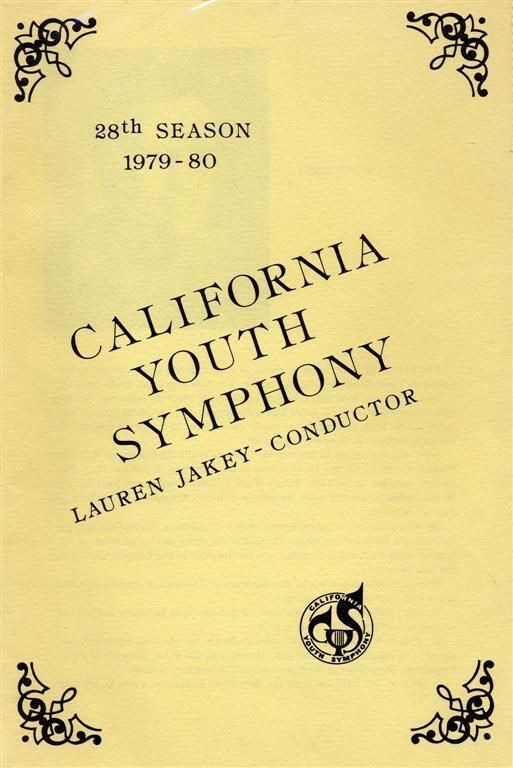
1979-1980
Roster

Seniors
The 28th Season Premiere: A New Chapter Begins (November 1979)
Concert Program Overview
CYS opened its 28th Season with a pair of concerts that marked the debut of its new musical leadership. The performances took place on Sunday, November 18, 1979, at the San Mateo High School Auditorium and on Sunday, November 25, at the De Anza College Flint Auditorium in Cupertino. This concert series represented a significant transition for the orchestra, featuring a blend of classical masterworks and modern symphonic compositions performed by nearly 100 students from across the Peninsula.
The program commenced with Wolfgang Amadeus Mozart’s vibrant Overture to The Magic Flute, K. 620, followed by the same composer's Concerto for Flute in D Major, K. 314, featuring soloist Jehudit R. Herman. The first half concluded with the contemporary Symphony No. 2 in C Major by Italian-American composer Vittorio Giannini, a work written in 1939 to honor the New York World’s Fair. After the intermission, the orchestra performed Jean Sibelius’s Romance in C Major, Op. 42 for string orchestra and concluded the evening with Franz Liszt’s powerful symphonic poem, Les Préludes, Op. 92.
New Musical Leadership
Dr. Lauren Jakey (Conductor): Appointed as the second musical director in the symphony's 27-year history, Dr. Jakey arrived as a distinguished violinist and professor from San Jose State University. He previously served as concertmaster for the San Jose Symphony and had first violin experience with the Houston and Baltimore symphonies. A graduate of Oberlin College and Indiana University, his conducting pedigree included study under Leonard Bernstein and George Szell. While critics noted that it would take time for the orchestra to fully blend with his new vision, his extensive background in woodwinds, brass, and percussion provided a sympathetic foundation for the young musicians.
Rowland (Robert) Schwab (Assistant Director): An accomplished conductor, composer, and clarinetist, Schwab brought international experience to the CYS after studying under Pierre Monteux and Herman Scherchen. He had previously conducted for the London Repertory Orchestra and the West Valley Symphony. Schwab felt a personal connection to the season's repertoire through his grandfather, who had studied under Antonín Dvořák in New York.
Featured Soloist: Jehudit R. Herman (Flute)
The season's first audition winner, 18-year-old Jehudit "Judi" R. Herman, performed as the featured soloist for the November concerts. A native of Millbrae and a music performance major at San Francisco State University, Herman had been studying the flute and piccolo for eight years under prominent teachers such as Paul Renzi and Lloyd Gowen. She came from a musical family, with a father who played professionally in San Francisco jazz orchestras. Her interpretation of the Mozart concerto was praised for its "grace" and "sweet tone," particularly during the Andante movement, where she displayed notable confidence and surety.
The 28th Season – Second Concert: Virtuosity and Noble Effort (March 1980)
Concert Program Overview
CYS presented the second major concert of its 28th Season on Sunday, March 2, 1980, at the San Mateo Performing Arts Center, with a repeat performance on March 9 at the De Anza College Flint Auditorium. Despite torrential rains during the premiere, nearly 100 young musicians representing over 60 communities delivered a program of significant difficulty that was recorded by radio station KKHI for future broadcast.
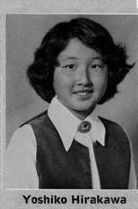
The program, led by musical director Dr. Lauren Jakey, opened with Nikolai Rimsky-Korsakov’s Russian Easter Overture, Op. 36, conducted by assistant director Rowland Schwab. Reviewer Angela M. Owen described this overture as the "most secure and balanced" work of the afternoon, praising Schwab for achieving a fine blend between the brass and strings, and noting well-executed solos by concertmistress Dana Swanson and cellist Laura Kramer. Following this was Ludwig van Beethoven’s Piano Concerto No. 2 in B-flat Major, Op. 19, featuring 14-year-old audition winner Yoshiko Hirakawa. While critics lauded Hirakawa’s "fine lyricism" and "surety and sensibility"—particularly in the Adagio movement—they noted that the orchestra's accompaniment at times struggled to match her consistent assurance.
The second half of the concert offered a complete change of pace with Steve Hanna’s Sonic Sauce, a "pleasing novelty" for percussion ensemble directed by Shelley Tosaw. The performance showcased agile work on the bongo, marimba, and xylophone, providing a lively contrast to the symphonic repertoire. The evening reached its grand, albeit challenging, conclusion with Antonín Dvořák’s Symphony No. 8 in G Major, Op. 88. Although the orchestra tackled the work with "more grit than finesse," professional reviews observed that the majestic late-Romantic style proved a formidable test, with the woodwinds appearing "tired" and the strings occasionally lacking the rich tonal depth the piece requires.
Featured Soloist: Yoshiko Hirakawa (Piano)
The concert spotlighted Yoshiko Hirakawa, a student at Westmoor High School in Daly City and the recipient of the 1979 CYS Association Audition Award. Having moved from Tokyo five years prior, Hirakawa brought a distinguished musical lineage to the stage; her great-grandfather was a founder of Aoyama Gakuin University, and her great-grandmother was a prominent piano teacher and organist. A pupil of Tomoko Hagiwara at the San Francisco Conservatory of Music, Hirakawa was praised by the San Mateo Times for her mature feeling for dynamics and an "extraordinary confidence" that made her melodies sparkle.
The 28th Season Finale: A Grand Transition and Triumphant Close (May 1980)
Concert Program Overview
CYS concluded its landmark 28th Season - the first under the leadership of new musical director Dr. Lauren Jakey - with performances on May 11, 1979, at the San Mateo High School Auditorium and May 18 at the Flint Center in Cupertino. This season finale was a showcase of the ensemble's resilience during its first year of transition, featuring a diverse repertoire that spanned from the disciplined structures of Haydn to the explosive theatricality of Tchaikovsky.
The program opened with a spirited rendition of Felix Mendelssohn’s Overture to Ruy Blas, followed by Joseph Haydn’s Symphony No. 100 in G Major ("Military"). While critics noted that the Haydn performance was "perky" in its final movement, some portions were felt to be slightly "prosaic". The evening also featured Giuseppe Tartini’s Concerto in D Minor for Violin and Strings and Carl Maria von Weber’s Concertino for Clarinet and Orchestra, Op. 26. The concert reached a dramatic climax with Peter Ilyich Tchaikovsky’s 1812 Overture, which utilized theatrical smoke effects to recreate the atmosphere of the Battle of Borodino, leaving the audience "highly pleased". Professional reviews highlighted the significant improvement in the orchestra's French horn section since previous concerts and praised the overall high standards maintained throughout the transitional year.
Featured Soloists
Dana Swenson (Violin)
The 17-year-old Dana Swenson, serving as the orchestra’s Concertmistress, performed as the featured violin soloist in the Tartini concerto. A member of CYS since 1973, Swenson was a highly decorated student, having received an honorable mention in the San Francisco Symphony Young Artist Awards and being named a National Merit Scholarship Finalist in 1980. Critics noted that while she began her performance with some initial hesitation, she quickly gained "authority and poise," delivering a performance that reflected her years of dedication to the ensemble. Following the season, she planned to attend Stanford University.
Michael Green (Clarinet)
Principal clarinetist Michael Green, also 17, delivered what critics called the "most outstanding" solo performance of the concert in Weber’s Concertino. Green, a student of assistant conductor Roland Schwab, had been a member of CYS for four years and was frequently recognized as an "Outstanding Musician" at various festivals. Reviewer Barbara Bladen lauded his performance for its "extraordinary sensitivity," technical fluency, and a "clean, sustained tone" that captured the playful yet demanding nature of Weber’s work. Green planned to continue his musical studies at U.C. Berkeley in the fall.