
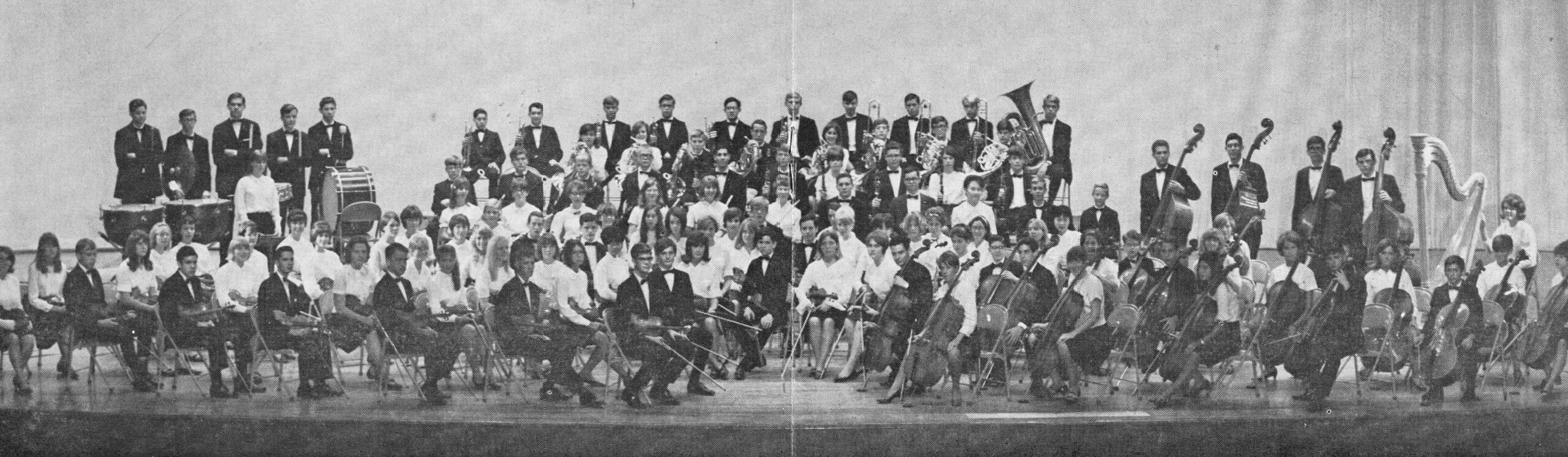
Season 15
1966-1967
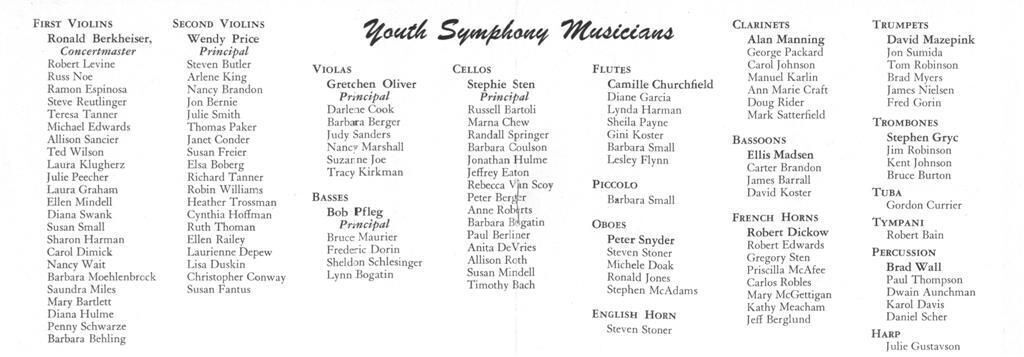
Roster
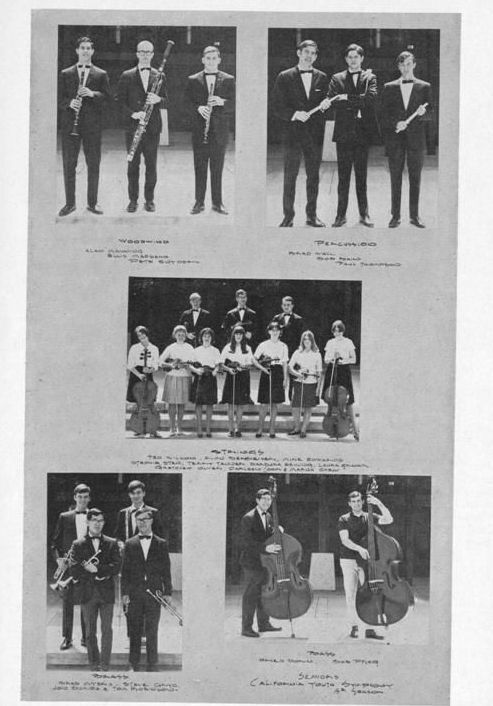
Seniors
November 1966 Concert
Concert Program Overview
The concert program featured a diverse selection of works spanning the Romantic and Classical eras:
ROMAN CARNIVAL OVERTURE by Louis Hector Berlioz (1803–1869)
The opera Benvenuto Cellini was written in Paris in 1838. The overture, composed in 1844, was inserted as the prelude to the second act. The opera never gained much popularity. Berlioz noted that Benvenuto was "massacred at the opera." However, the second overture was so warmly received that it had to be repeated on the spot. The central theme is the rollicking "saltarello" or grand carnival dance, making "Le Carnaval Romain" a popular concert piece.
VIOLIN CONCERTO IN G MAJOR (K 216) by Wolfgang Amadeus Mozart (1756–1791)
This is one of five violin concertos composed by Mozart in 1775 in Salzburg. All the concertos are in three movements: Allegro, Andante or Adagio, and Rondo. The orchestration is invariably two oboes, two horns, and strings. The cadenzas played were composed by Fritz Kreisler.
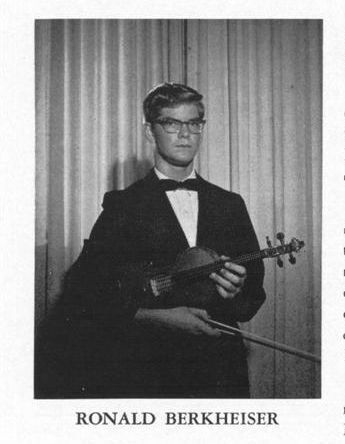
Soloist: Ronald Berkheiser.
SYMPHONY NO. 2 IN D MAJOR by Jan Sibelius (1865–1957)
The composer conducted the first performance in Helsinki, Finland, on March 8, 1902. George Schneevoigt described the movements with programs for his own concert:
- First Movement (Allegretto – Poco allegro): Depicts the calm and pastoral life of Finland untroubled by a fear of oppression.
- Second Movement (Tempo andante, ma Rubato): Appears to be teemed with a nationalistic fervor, but the thought of a brutal rule over the people brings with it a timidity of soul.
- Third Movement (Vivacissimo): Pictures the awakening of rebellious feelings, the people's growing determination to defend their rights.
- Fourth Movement (Finale – Allegro moderato): Shouts out the hope of Finland's triumph, expressing comfort, mirroring the promise of deliverance from oppression.
Featured Soloist: Ronald Berkheiser (Violin)
Ronald Berkheiser is a 17-year-old senior at Cubberley High School in Palo Alto. His musical journey began early, studying violin with the United Institute of Music from 1957 through May 1961, and he later had the good fortune to study with Maestro Aaron Sten, following his time with the late Valborg Leland. He has held the concertmaster position in his school orchestra since the fourth grade, continuing through high school, and also served as concertmaster for the All-City Elementary Orchestra. A dedicated member of CYS since June 1960, this performance marks his third season as the CYS concertmaster. His talent has taken him on international tours with the CYS to Japan in 1963 and Mexico in 1966. Beyond the orchestra pit, he has performed as a soloist with Youth Concerts Incorporated and participated in major ensembles like the All California High School Orchestra. When he's not playing the violin, Ronald also lends his voice to the Cubberley Choir, the Gentlemen Songsters, and the Chorale. He wishes to express his thanks to all his teachers and to Mr. Sten for his guidance and patience over the years.
March 1967 Concert
Concert Program Overview
The concert opened with the tone poem VLTAVA (MOLDAU) by Bedřich Smetana. This masterful work, which expresses Czech nationalism, musically narrates the course of the Vltava River, tracing its path from its cold, bubbling springs to its grand flow through Prague, past ancient castles and ruins, finally fading into the distance. Following this was the PIANO CONCERTO NO. 5 IN E-FLAT, OPUS 73 by Ludwig van Beethoven, known as the "Emperor" Concerto. First performed in 1811, it is considered one of Beethoven’s most original, imaginative, and effective concertos. The soloist, David Edward Percy, performed the dramatic First Movement: Allegro. After intermission, the program featured Maurice Ravel's INTRODUCTION AND ALLEGRO, a challenging piece scored for harp, flute, clarinet, and string quartet, with Julie Gustavson as the featured harp soloist. The concert concluded with Beethoven's programmatic "battle piece," WELLINGTON’S VICTORY, OP. 91. This work celebrates the Duke of Wellington's triumph over Napoleon in 1813, using the national airs of both countries and requiring special effects, including the sounds of muskets and cannon provided by ROTC cadets in this performance, which the reviewer described as a "delightful noisy demonstration."
Featured Soloists
David Edward Percy (Piano)
David Edward Percy, the piano audition winner for the season, was 15 years old and attended El Camino High School in South San Francisco. Born in St. Paul, Minnesota, on September 29, 1951, he lives with his parents and his twin brothers. David Percy has studied piano with Katherine Henry Miller of San Francisco. He gave his first solo appearance in 1962 and has since performed in numerous recitals, including Spring Festivals and several appearances at San Francisco State College. He has won two Pacific Musical Society scholarships and performed a Mozart Concerto with the San Francisco Symphony on their Youth Concerts. David's talent was lauded in a review for his "quick-fingered agility," "rhythmic sense," and expressive precision. Outside of music, David's hobby is painting, and he serves as the assistant organist at Bethel Lutheran Church.
Julie Gustavson (Harp)
Julie Gustavson is a sixteen-year-old junior at Los Altos High School and is the daughter of John B. Gustavson. Her mother, a well-known harp soloist, teaches harp at San Jose State College. Julie has studied harp for six years with Marjorie Chauvel of Palo Alto and spent a summer studying with Alice Chalifoux, the principal harpist with the Cleveland Symphony. She is one of the youngest members of the California Youth Symphony, having toured Japan with them in the summer of 1963, and is now in her fifth year with the orchestra. Julie has also played with the Foothill Junior Symphony, the El Camino Youth Symphony, the Sequoia District Honor Orchestra, and the adult Peninsula Symphony. A review of her performance noted that her playing produced the "sensuous showers of sound that one almost expects from the instrument," but also that the harp must be "coaxed" to achieve good balance.
May 1967 Concert
Concert Program Overview
The program for the May 1967 concert opened with the challenging SYMPHONY NO. 5, OPUS 47 by Dimitri Shostakovich. This work is noted for its dramatic power and striking contrast, featuring movements like the Moderato, Larghetto (a solo-rich, melodious movement), Allegretto (a scherzo resembling a waltz), and a march-like Allegro non troppo finale. The program notes mention that the first movement’s beauty gives way to a grim and aloof second subject. Following the symphony was TOWARD THE UNKNOWN REGION, a Song for Chorus and Orchestra by R. Vaughan Williams, featuring Whitman's text about journeying to a realm beyond the known. The chorus for this performance was a combined ensemble from Carlmont and San Carlos High Schools and the Woodside High School Choirs, along with the Sequoia Union High School District. Next, the orchestra featured LARGHETTO FOR HORN by Alexis Emmanuel Chabrier, a beautiful work originally written for horn and orchestra but arranged here for horn and woodwind accompaniment. The concert concluded with OVERTURE TO "RUSSLAN AND LUDMILLA" by Michail Ivanoevich Glinka. This opera's overture, penned in 1842, is considered the start of Russian national opera and is known for its incredible speed, high spirits, and contrasting orchestral colors.
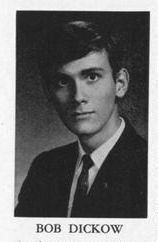
Featured Soloist Profile: Bob Dickow (Horn)
Bob Dickow is an eighteen-year-old senior at Carlmont High School in Belmont. He lives in San Carlos with his parents. Bob played the horn for seven years and studied under Charlie Loper of Menlo Park and with Mr. Ralph Hertz. His first horn chair with the San Francisco Symphony was secured through an open audition, and he currently holds the third horn chair. He is a member of the California Youth Symphony, having participated in the 1963 Japan concert tour and the 1966 Mexico tour, where he was a principal player. He also plays with the Foothill Junior Symphony and the Peninsula Symphony. Bob is known for being a soloist with the Youth Concerts Incorporated and participates in many school music functions, including band, orchestra, and stage band. He was also selected as first horn for the California Music Educator's National Conference Western Division Orchestra in 1966. A glowing review praised his "low tone under firm control in the Larghetto." Beyond the concert stage, Bob is a composer of chamber music, and his other interests include biological sciences and orchid growing.